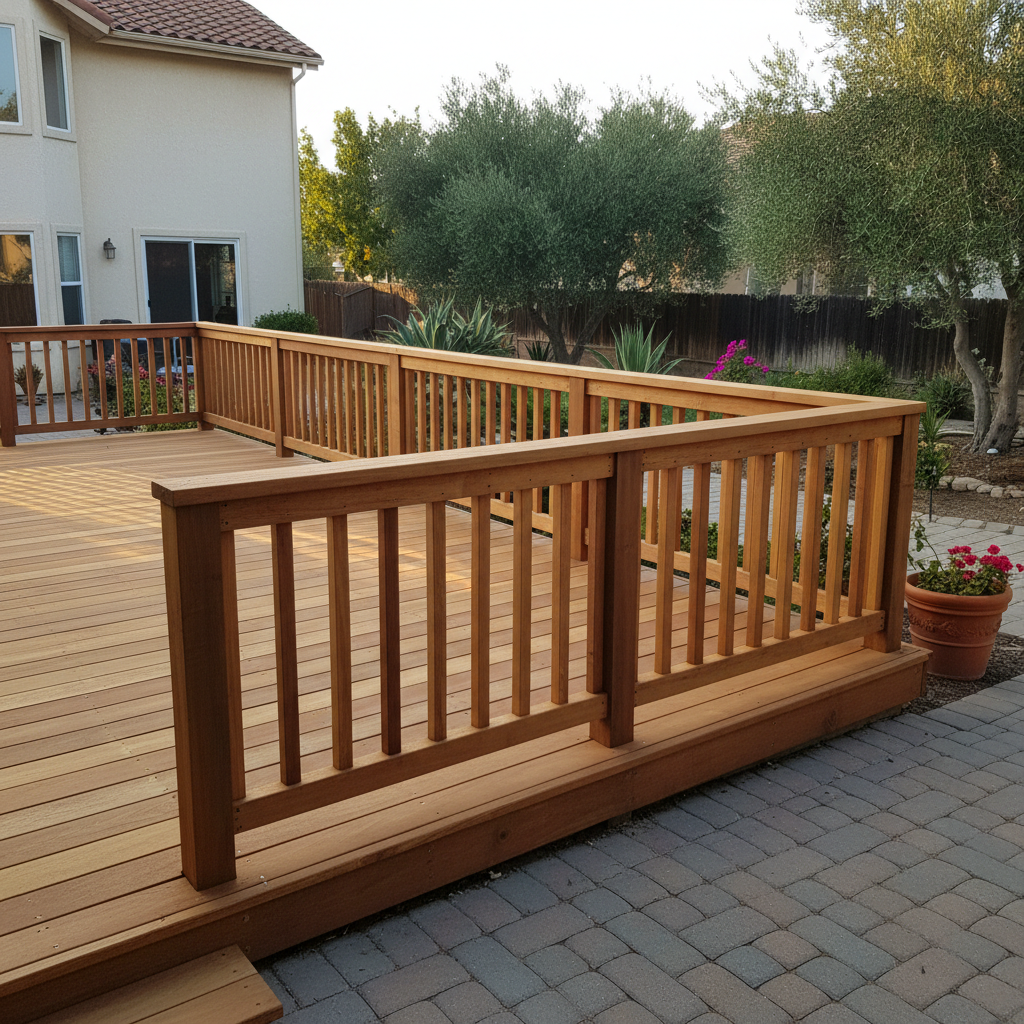
Your deck railings aren't just there to look nice; they're a safety barrier. Here in Fresno, with our scorching summers and those occasional wet winters, those railings really take a beating. Honestly, I've seen plenty of railings that could have lasted years longer if people had just known a few simple maintenance tricks. So, let's chat about keeping your deck railings solid, safe, and looking good.
Making Your Deck Railings Last Longer
The biggest thing you can do to extend the life of your railings is to protect them from the elements. For wood railings, that means regular sealing or staining. I'm not suggesting you do it every year, but definitely every few years. It really depends on the product you use and how much sun your deck gets. Our intense UV rays here in the Central Valley are brutal on wood, drying it out and causing it to crack and splinter if it's not protected.
Composite railings, like Trex or similar brands, are a lot less work, but they're not maintenance-free. They still need cleaning to prevent mold and mildew, especially on the north-facing sides of homes where it stays shadier and damp longer after a rain. And even though they don't rot, the fasteners holding them together can still rust or loosen over time, you know?
Metal railings, whether aluminum or steel, are pretty tough. Still, they're not invincible. Keep an eye out for scratches in the powder coating, especially on aluminum. If that coating gets compromised, the metal underneath can start to oxidize or corrode. A quick touch-up with a compatible paint can prevent bigger problems down the line.
Regular Maintenance: What You Should Be Doing
Think of this as your annual check-up for your railings. You don't need fancy tools or a lot of time, just a little attention to detail.
- Clean 'em up: At least once a year, give your railings a good wash. A bucket of warm water, a mild soap (like dish soap), and a soft brush or cloth usually do the trick. Rinse thoroughly, of course. For tougher grime or mildew, a pressure washer on a very low setting, held far back, can work, but you need to be super careful, especially with wood or older composite. You really don't want to damage the material.
- Check the fasteners: Go around and gently wiggle each post and section of railing. Are they firm? If you find any wobbles, check the screws or bolts. Sometimes they just need a little tightening. For wood, screws can back out as the wood expands and contracts with our temperature swings. Don't overtighten, though, or you could strip the wood.
- Inspect for damage: Look for cracks, splinters, or rot in wood. Are there any loose balusters? For composite, check for deep scratches or fading. For metal, look for rust spots, chipped paint, or bent sections. Pay close attention to where the railings meet the deck surface, as this is often where moisture can sit and cause issues.
- Clear debris: Make sure leaves, dirt, and other debris aren't piling up around the base of your posts. This traps moisture and can lead to rot in wood or staining on composite.
Warning Signs You Shouldn't Ignore
Catching problems early can save you a lot of headache and money. Here are some red flags:
- Wobbling posts or sections: This is a big one. If your railing feels loose when you lean on it, that's a safety hazard. Don't put it off.
- Rot or significant cracking in wood: If you can poke a screwdriver into the wood easily, or if you see large, deep cracks, the structural integrity is compromised. This is common in older decks, especially if they weren't properly sealed or if water has been pooling.
- Excessive rust on metal: A little surface rust on a bolt head might be okay, but if you see rust spreading or flaking off, it needs attention. It means the protective coating has failed, and the metal is corroding.
- Loose or missing balusters: Not only does this look bad, but it creates gaps that could be a fall hazard, especially if you have kids or pets.
- Fading or chalking on composite: While mostly cosmetic, significant fading can indicate the surface is breaking down, and it might be harder to clean effectively.
When to Call a Professional
Look, I'm a big believer in DIY when it makes sense, but some jobs are best left to the pros. If you're seeing any of these, it's time to pick up the phone:
- Major structural issues: If multiple posts are wobbly, or if you suspect the ledger board (where the deck attaches to your house) is compromised, don't try to fix it yourself. This impacts the entire deck's safety.
- Extensive rot: If rot has spread through large sections of your railing or into the deck framing itself, you're looking at a bigger repair than just replacing a few boards.
- You're not sure what to do: If you've identified a problem but aren't confident in how to fix it safely and correctly, that's a good reason to call. It's better to get it done right than to create a bigger problem or, worse, a safety risk.
- When you need a permit: For significant structural repairs or replacements, you might need a building permit. A professional like Built Right Decks of Fresno will know the local codes and handle that for you. We've been building and repairing decks around places like Fig Garden and Old Fig for years, so we know what we're doing.
- You just don't have the time or tools: Life gets busy. If you know the work needs to be done but can't commit to it, that's what we're here for.
Keeping your deck railings in good shape isn't just about curb appeal; it's about keeping your family and guests safe. A little regular care goes a long way in making sure your outdoor space stays a place for enjoyment, not worry.