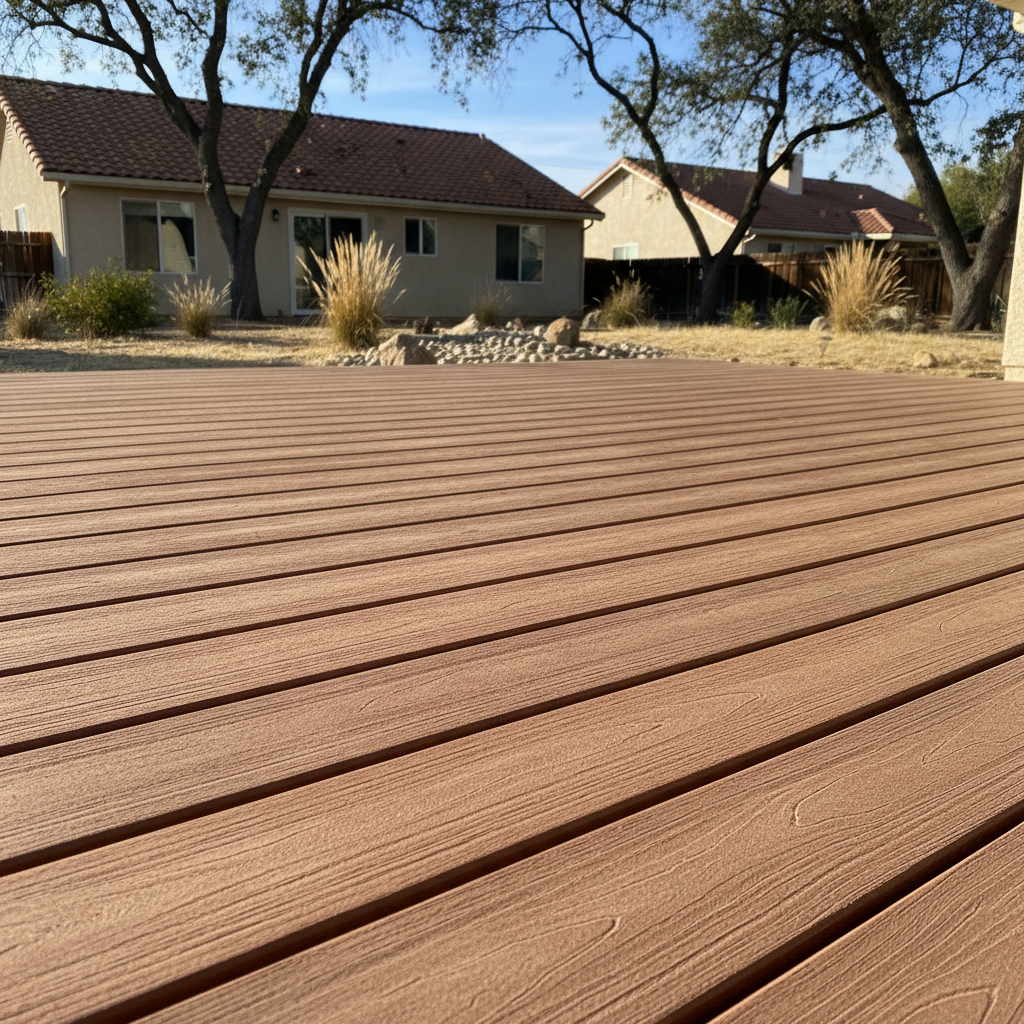
Thinking About a Trex Deck? Here's What You Need to Know
So, you're thinking about a Trex deck for your backyard. Good call. Composite decking, especially Trex, is a smart choice for us here in Fresno. You won't have to worry about splinters or constant staining, which, let's be honest, is a huge relief when our summers hit 100+ degrees and wood just bakes. But before you jump in, let's talk about what a homeowner can realistically tackle themselves and when it's really time to call in the pros.
Before You Start: Planning & Permits
First things first, you can absolutely handle the planning phase on your own. Think about how you'll actually use the deck. Is it just for a grill and a couple of chairs? Or are you dreaming of an outdoor dining area, maybe a hot tub, or even a full outdoor kitchen? That'll pretty much decide the size and how complicated the project will be. Sketch it out. Measure your space. Check out the different Trex colors and styles – they've really expanded their options.
Now, permits. This is where a lot of people get stuck, and it's definitely not something you want to skip. In Fresno, any deck over 30 inches off the ground, or one that's attached to your house, usually needs a building permit. Even if it's lower, if it's big enough, you might still need one. The city just wants to make sure it's built safely and up to code. You can pull these permits yourself – it means submitting plans, maybe a site map, and paying some fees. It's a bit of a bureaucratic dance, sure, but it's totally doable. Just be ready for a few trips to City Hall and possibly some revisions. If you're building something complex, though, like a multi-level deck or one with a roof structure, that's when I'd say a pro can save you a ton of headaches with the permitting process.
During the Build: DIY vs. Pro Help
Alright, you've got your plans and your permit. Now for the actual building. Here's my take:
Demolition: If you're replacing an old deck, tearing it down is absolutely a DIY job. Just make sure you have the right tools and a plan for getting rid of the old stuff. Rent a dumpster, or haul it to the dump yourself.
Framing: This is the backbone of your deck, and it has to be spot-on. If you're comfortable with carpentry, know how to measure accurately, cut straight, and understand joist spacing and how to attach a ledger board, you can probably handle a simple, low-to-the-ground frame. But if your deck is high off the ground, involves tricky angles, or needs a lot of support posts, I'd really recommend hiring a pro for the framing. A poorly built frame means a bouncy, unsafe deck, and that's not something you want to mess with. Plus, inspectors are super particular about framing.
Decking Installation: Laying the Trex boards themselves is pretty straightforward for most homeowners. Trex comes with hidden fasteners, which gives you a nice, clean look. You'll need a good miter saw for cuts, a drill, and some patience. Follow the manufacturer's instructions for gapping – that's especially important here in Fresno with our temperature swings; you need to allow for expansion and contraction. This is totally a DIY task for most folks.
Railings: Trex also makes railing systems that are designed to go with their decking. These are generally easier to put in than custom wood railings. If you're handy, you can likely tackle this. Just make sure your posts are solid and plumb. Safety is key here, so don't cut corners.
Honestly, a lot of homeowners can handle a simple, ground-level Trex deck from start to finish. But for anything elevated, complex, or if you're just not feeling confident in your carpentry skills, getting Built Right Decks of Fresno or another reputable contractor to do the framing, at least, is a smart investment. It ensures safety and longevity.
After the Build: Care and Maintenance
One of the biggest reasons people choose Trex is how little maintenance it needs, and it's true. You won't be staining or sealing every year. But