Do I paint or stain my deck? What's the difference?
This is probably the question I hear most often, and it's a good one. It really comes down to how you want your deck to look and how much effort you're willing to put in later on. Think of it this way: paint is a thick layer that just sits on top of the wood. It completely hides the grain, giving you a solid, opaque color. You can find paint in pretty much any color you can imagine, which is perfect if you're trying to match your house trim or make a bold statement. The downside? Paint can chip, peel, and crack, especially with our scorching Fresno summers and those sudden temperature drops. When it fails, you're usually looking at scraping, sanding, and a whole lot more prep work for the next coat.
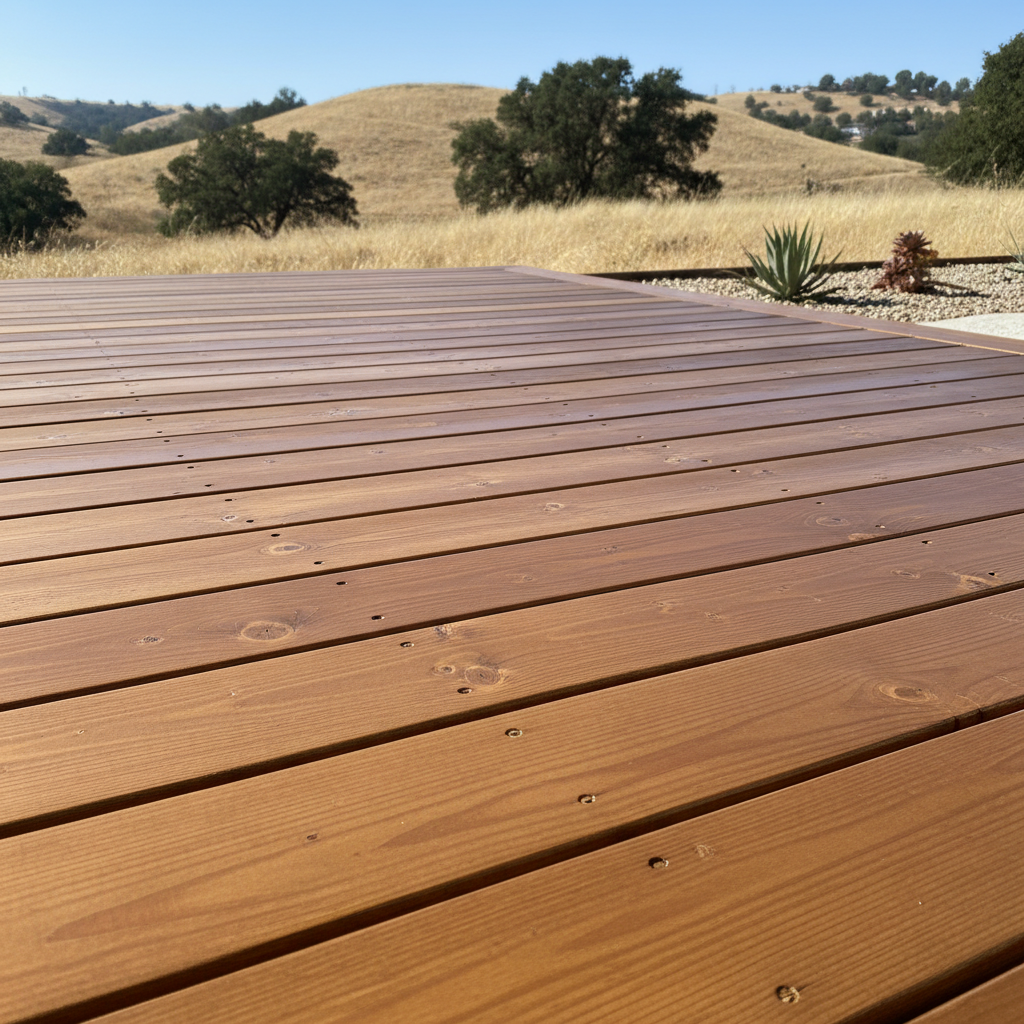
Stain, on the other hand, soaks into the wood. It doesn't just rest on the surface. There are different kinds, too: clear, transparent, semi-transparent, and solid. Clear and transparent stains let the wood's natural beauty and grain really shine through, just adding a bit of protection or a subtle tint. Semi-transparent gives you some color but still shows off the grain, and solid stain provides an opaque color like paint, yet some of the wood's texture still comes through. The big plus for stain is that it tends to wear away more gracefully than paint. It fades instead of peeling, which usually means less intense prep work when it's time to reapply — often just a good cleaning and a fresh coat. For most folks in Fresno, especially with our intense sun, I usually recommend a good quality stain for better longevity and easier upkeep.
How often do I need to re-finish my deck?
Okay, so there's no single answer that fits everyone, but I can give you some realistic expectations. For paint, you're probably looking at re-painting every 2-5 years. It really depends on the paint's quality, how well the prep work was done, and how much sun and foot traffic your deck gets. If your deck is totally exposed to the afternoon sun, like many decks in the Fig Garden area, you'll be on the shorter end of that range.
For stain, it varies even more by type. A clear or transparent stain might need another coat every 1-2 years, just to keep that UV protection going strong. Semi-transparent stains usually last 2-3 years. Solid stains, because they have more pigment, can hold up for 3-5 years, sometimes even longer if they're in a shadier spot. The trick is to watch for signs of wear — fading, water no longer beading up, or areas starting to look dry. Don't wait until it's peeling or completely gray; that just makes the job harder, trust me.
What's the best time of year to paint or stain a deck in Fresno?
You'd think with all our sunshine, any time would be fine, right? Not exactly. The perfect conditions are when it's not too hot, not too cold, and definitely not raining. Here in Fresno, that usually means late spring (April-May) or early fall (September-October). You want steady temperatures between 50 and 85 degrees Fahrenheit for at least 24-48 hours after you apply the finish. Humidity matters too; if it's too high, it can mess with drying times. Trying to paint or stain in July or August when it's 100+ degrees is a recipe for disaster — the finish dries too fast, doesn't soak in properly, and you'll end up with lap marks or a finish that fails quickly. And trying to do it in the middle of winter? Forget about it, it just won't cure right. Pick a stretch of mild weather, and you'll get a much better result.
Do I need to strip the old finish off completely?
Most of the time, yes, you do. Especially if you're switching from paint to stain, or if the old finish is peeling, flaking, or just in really rough shape. You can't put a good new finish over a failing old one and expect it to last. Think of it like a chain: it's only as strong as its weakest link. If the old finish is peeling, your new finish will just peel right off with it. For stains, if it's just faded and not peeling, you might be able to get away with a really thorough cleaning and a light sanding, then apply a compatible stain. But if there's any doubt, or if you're changing types of finish, stripping is the safest bet. It's more work upfront, but it saves you a ton of headaches down the line. I've seen too many folks try to cut corners here only to have their deck finish fail in a year.
Can I change the color of my deck?
Absolutely, you can change the color! If you're going from a lighter stain to a darker one, it's usually pretty straightforward after a good cleaning and prep. If you're going from a darker stain to a lighter one, or from paint to stain, that's when stripping comes in. You'll need to remove as much of the old color as possible so the new color shows true. If you're just painting, you can go from light to dark or dark to light, but you might need an extra coat or a good primer if you're making a drastic change. Just remember, the final color can look a little different on your actual deck wood than it does on the swatch, so it's always smart to test a small, out-of-the-way area first. Or, even better, get a sample size and paint a scrap piece of wood that's similar to your deck.
What kind of prep work is involved before I start?
Prep work is probably 75% of the job, seriously. Don't skimp on this. First, clear everything off the deck. Then, give it a good cleaning. I mean a really good cleaning. Use a deck cleaner specifically made for wood, and if you're using a pressure washer, be careful! Too much pressure, and you can damage the wood fibers, leaving those ugly 'tiger stripes' that show up even after you stain. Keep the nozzle moving and don't get too close. After cleaning, let the deck dry completely — usually 2-3 sunny days here in Fresno. If there's any old finish peeling, you'll need to scrape and sand it down. Any loose wood fibers, splinters, or rough spots should be sanded smooth. Replace any rotten boards. Tighten any loose screws or nails. You want a clean, dry, sound surface for your finish to stick to. It's tedious, but it's what makes the difference between a finish that lasts and one that fails quickly. This is where Built Right Decks of Fresno truly shines — we don't cut corners on the prep.
Do I need to seal my deck after staining or painting?
This depends on the product you're using. Most modern deck stains and paints are designed to be an all-in-one product, meaning they include sealants and UV inhibitors right in the mix. So, if you're using a good quality deck stain or paint, you typically don't need a separate sealer on top. Adding another layer might even interfere with how the product works or cures. Always read the manufacturer's instructions on the can — they'll tell you if an additional sealer is recommended or not. If you're using a very basic, non-protective stain, or just want extra water repellency, then a separate sealer might be an option. But for the vast majority of homeowners, a quality deck finish is made to do both jobs: color and protect.